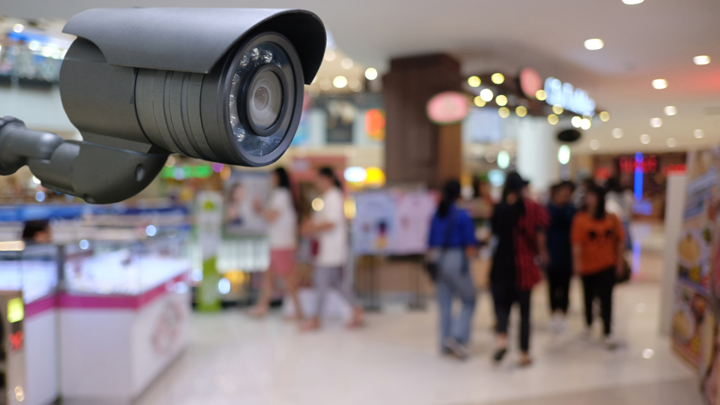
Video surveillance has traditionally been very good at answering one question: what happened? Modern video analytics can help businesses answer that question faster—and, depending on the system, help identify certain activity while it is occurring. Instead of treating every camera as a passive source of footage, analytics software can analyze video for defined objects, movements, or events and help authorized users focus on what matters. The important word there is help. At Cam-Dex Security Corp., we don’t believe businesses need every analytics feature simply because it’s available. The best technology solves a real problem. When we’re discussing video surveillance analytics in St. Louis, we want to understand what takes your team too long today, which areas need greater awareness, and what information would actually make your surveillance system more useful. Here are some of the analytics capabilities that can provide practical value in commercial environments.
Faster Video Search Can Save Hours
One of the most useful applications of analytics isn’t particularly dramatic. It simply helps people find recorded video faster. Imagine an employee discovers property damage Monday morning but only knows it happened sometime over the weekend. With conventional surveillance, someone might need to manually review hours of recordings across multiple cameras. Search tools supported by video analytics can help narrow that investigation. Depending on the platform, users may be able to search recordings based on criteria such as detected people, vehicles, activity within an area, or other supported classifications. Instead of watching an entire timeline, an authorized user can focus on potentially relevant events. For businesses operating numerous cameras, this can transform surveillance from an archive of footage into a much more practical investigative tool.
Person and Vehicle Classification Adds Context
Traditional motion detection has an obvious limitation: many things move. Changing shadows, vegetation, weather, animals, headlights, and other environmental activity can potentially generate motion. More advanced analytics may be able to classify certain detected objects, such as people or vehicles, depending on the technology. That additional context can make event rules more useful. A business may care about a person entering a particular exterior area after hours but not every movement occurring in the same scene. Similarly, a facility may be particularly interested in vehicle activity in a defined location. Businesses evaluating St. Louis video surveillance analytics should still understand that classification isn’t infallible. Camera positioning, lighting, weather, distance, scene complexity, and configuration can influence performance. Analytics should improve decision-making—not replace it.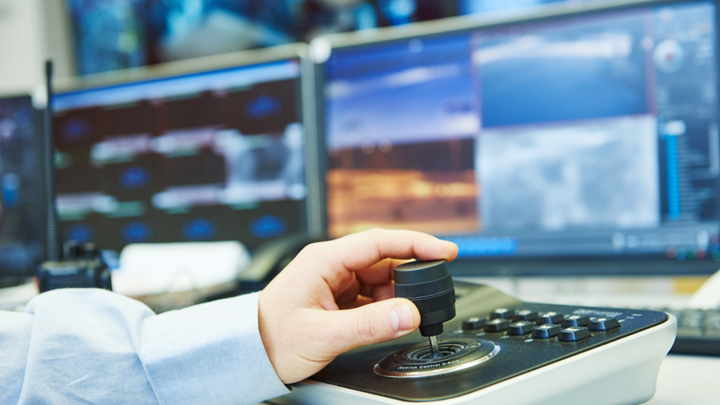
Line-Crossing Analytics Can Monitor Defined Boundaries
Sometimes the important event isn’t simply that someone is visible. It’s that someone or something crossed a specific boundary. Line-crossing analytics can allow a virtual line to be defined within a camera’s field of view. Depending on the platform, the system can generate an event when a supported object crosses that line according to configured rules. There are numerous potential applications. A facility might want greater awareness around a restricted perimeter, loading area, equipment location, or another space where movement across a particular boundary matters. The advantage is focus. Instead of treating the camera’s entire image as equally important, the analytic rule can be designed around a specific security objective. That’s the type of practical planning we consider when discussing video surveillance systems in St. Louis.
Area or Intrusion Detection Can Focus on Important Spaces
Similar to line crossing, area-based analytics can be configured around a defined portion of a camera’s view. Why does that matter? Consider a camera covering a large property. Normal activity may occur throughout much of the scene during business hours, while one restricted section should rarely have anyone inside it. An area-based analytic can potentially focus attention on activity within that specific location. This can be useful around sensitive exterior spaces, restricted operational areas, certain entrances, or other locations where activity deserves additional attention. However, good configuration matters. A rule that’s too broad or sensitive can produce excessive events. If users receive too many unnecessary notifications, they may begin paying less attention to them. More alerts aren’t necessarily better. Useful alerts are better.
Dwell and Loitering-Related Analytics Can Identify Extended Activity
In some environments, the amount of time someone remains in an area can matter. Depending on the surveillance platform, dwell or loitering-related analytics may identify when a person or object remains within a defined area beyond configured conditions. That can provide another layer of situational awareness for locations where brief activity is normal but extended presence may deserve attention. The key is understanding normal behavior first. If employees regularly spend several minutes in the area, configuring an alert around that same behavior won’t provide much value. Analytics should reflect how the facility actually operates. This is why professional video surveillance systems in Saint Louis shouldn’t be configured from a generic template. The same analytic can be valuable at one property and create unnecessary noise at another.
Analytics Can Make Notifications More Relevant
A surveillance system that generates constant notifications can quickly become difficult to manage. Analytics can potentially improve notifications by allowing businesses to define more specific events. Instead of notifying someone whenever anything moves, the system may be configured around supported objects or activity that better matches the organization’s security concerns. For example, an after-hours event involving a detected person in a defined area may deserve more attention than ordinary environmental motion. But notification design needs restraint. We generally want technology to reduce the amount of irrelevant information employees have to process, not increase it. Before creating an alert, ask who needs to receive it, why they need it, what action they should take, and when the notification should be active. An alert without a response plan is often just another notification.
Analytics Can Support Commercial Operations Too
Although security is the primary reason many organizations install surveillance, certain analytics may provide useful operational information as well. Depending on the platform and environment, businesses may be able to use supported analytics to better understand patterns of activity, vehicle movement, occupancy-related information, or how certain areas are being used. That doesn’t mean surveillance analytics should automatically become an employee-monitoring tool. Businesses need to consider privacy, workplace policies, applicable requirements, and the legitimate purpose for collecting or using information. Having the technical ability to analyze something doesn’t automatically mean an organization should. For commercial video surveillance in St. Louis, the best analytics applications have a clear purpose and an identifiable benefit.
Camera Placement Still Determines Analytics Performance
Adding analytics software cannot fix every problem with an improperly designed camera system. If the camera doesn’t have an appropriate view of the subject, the analytic has limited information to work with. Distance, viewing angle, image quality, lighting, weather, obstructions, and scene complexity can all affect performance. That’s why analytics should be considered during surveillance design—not simply added afterward with the expectation that software will solve every limitation. A camera providing broad situational awareness across a large parking lot may have different analytics capabilities and objectives from a camera positioned around a controlled entrance. Good St. Louis commercial video surveillance starts with understanding what each camera is expected to accomplish.
Analytics Can Help With Investigations After an Incident
Real-time alerts receive a lot of attention, but post-event investigation may be where analytics delivers some of its most consistent value. When an incident occurs, businesses usually aren’t asking for every minute of footage. They’re looking for a specific person, vehicle, movement, or event. Analytics-supported search can help reduce the amount of video an authorized user has to review manually. Across a large facility with dozens of cameras, that time savings can become significant. It also makes surveillance more approachable for managers who don’t spend their entire day operating security software. A good system should help people get to useful information without requiring them to become video-forensics specialists.
Video Analytics Isn’t Artificial Intelligence Magic
It’s important to establish realistic expectations. Analytics can miss events. They can also classify activity incorrectly or generate events that aren’t relevant once a person reviews the video. Performance depends on the technology, environment, camera placement, configuration, and the task you’re asking the system to perform. That’s why we don’t view video surveillance analytics in St. Louis as a replacement for employees, security procedures, or human judgment. We view analytics as a tool for helping people work with video more efficiently. That distinction matters because a system that is sold with unrealistic expectations is likely to disappoint even if the underlying technology is useful.
Choose Analytics Based on Problems, Not Feature Lists
When evaluating analytics, start with your actual security challenges.
Does your team spend too much time searching recorded footage? Do you need better awareness around a particular perimeter or restricted area? Are basic motion alerts producing too much noise? Would identifying specific categories of activity make investigations more efficient?
Once those questions are answered, you can determine which analytics capabilities are worth considering.
At Cam-Dex Security Corp., that’s how we approach video surveillance analytics in St. Louis. We believe the value isn’t in turning on every available feature. It’s in selecting and configuring technology that addresses real security and operational needs.
If you’re evaluating your existing surveillance system or planning a new one, Cam-Dex can help you consider camera coverage, analytics requirements, system management, and how your team will actually use the information.
Because the best video analytics feature isn’t necessarily the most advanced one.
It’s the one your business actually uses.
Just Need Security That Works?
Look, we know security can get overwhelming fast—too many options, too much jargon. That’s not how we do things.
At Cam-Dex, we’ve been doing this for decades. We show up, figure out what you actually need, and get it done right. No big sales pitch. No overcomplicating it.

Want to discuss your security needs? Fill out a form here.
If you’ve got questions or just want to walk through some options, give us a call at 913-621-6160. We’ll talk like people. Figure it out together. Easy as that.