Keys can be lost. Access cards can be misplaced. PINs can be shared or forgotten. Those realities create an important question for businesses protecting sensitive areas: how do you establish greater confidence that the person requesting access is actually the person who has been authorized? Biometric authentication provides one possible answer. Instead of relying exclusively on something a person carries or knows, biometric technology can use a physical characteristic as part of the authentication process. Depending on the system, that could involve a fingerprint, face, iris, or another supported biometric identifier. At Cam-Dex Security Corp., we believe biometrics should be approached the same way as any other security technology: start with the problem you’re trying to solve. If you’re evaluating a Tulsa biometric security company, the goal shouldn’t simply be to install the newest technology. It should be to determine whether biometric authentication provides meaningful value for your facility.
What Is Biometric Authentication?
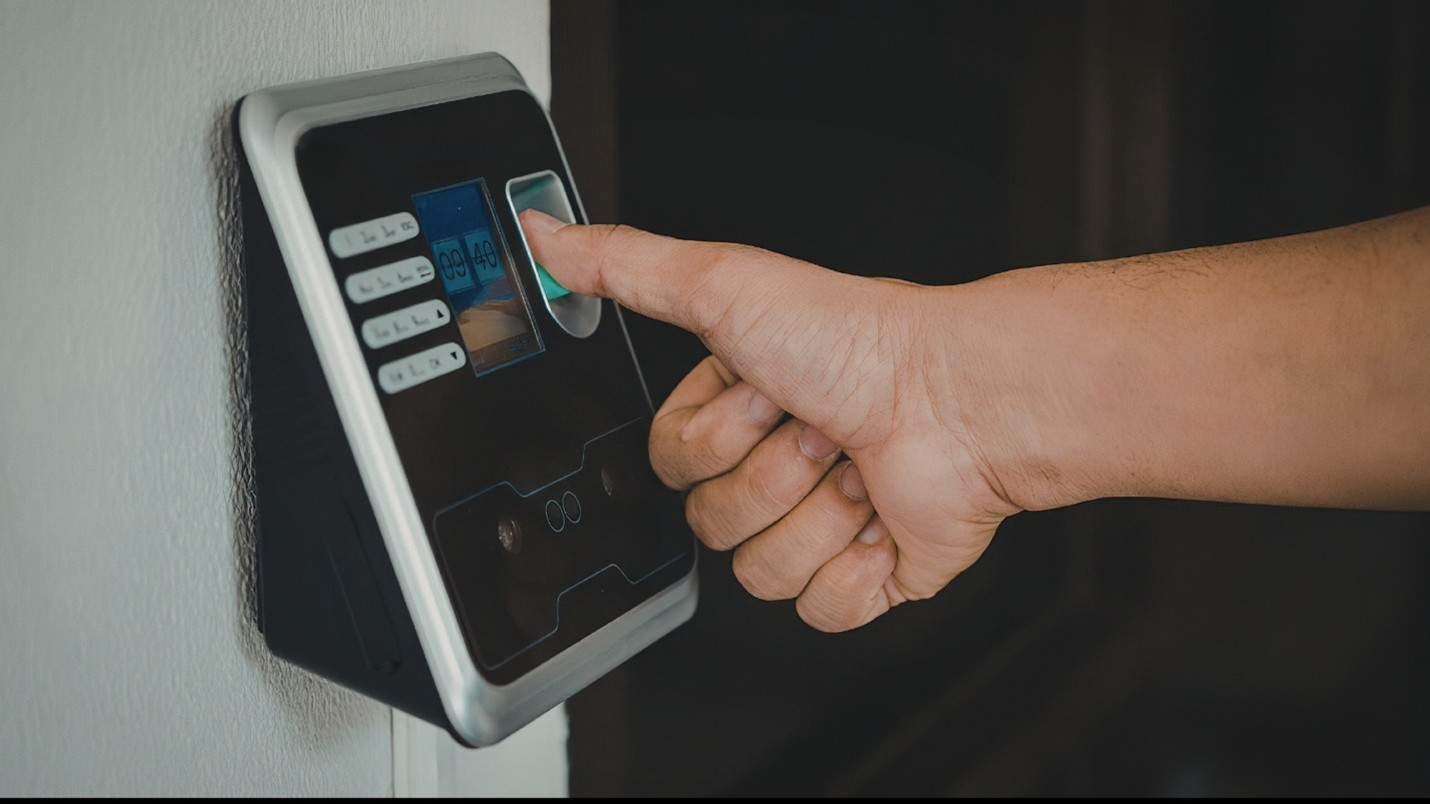
Traditional access control typically verifies something the user has, such as a credential, or something the user knows, such as a PIN. Biometrics introduce something associated with who the authorized person is. During enrollment, a compatible biometric system captures information needed to create a biometric reference or template. When the individual later requests access, the system compares the presented biometric information against the appropriate enrolled information according to the system’s design. One important point is that biometric matching isn’t necessarily the same thing as simply storing and comparing ordinary photographs or raw physical characteristics. How biometric information is captured, converted, stored, protected, and matched depends on the technology being used. That’s why businesses considering Tulsa biometric security should look beyond the reader at the door and understand the complete system behind it.
Biometrics Can Reduce Reliance on Transferable Credentials
One of the fundamental limitations of a traditional card is simple: possession doesn’t always establish identity. An authorized employee can accidentally leave a credential somewhere. Someone can potentially use another person’s card. PINs present a similar challenge because people can share them, write them down, or choose weak codes. Biometric authentication can make that type of credential sharing more difficult because the authentication factor is associated with the enrolled individual. That doesn’t mean biometrics make unauthorized access impossible. No authentication technology should be presented as perfect. Instead, biometrics can provide another way to strengthen the level of confidence associated with an access decision. For businesses evaluating biometric security in Tulsa, that can be particularly relevant for areas where stronger identity verification is appropriate.
Biometrics Can Strengthen Multi-Factor Access Control
Biometric technology doesn’t always need to replace cards or other credentials. In some environments, its greatest value may come from combining authentication methods. For example, a facility could require an authorized credential plus biometric verification before granting access to a particularly sensitive area. That combines two different factors: something the employee has and something associated with who they are. This approach can make sense when a business wants stronger authentication around certain locations without creating the same requirements at every door. An employee entrance, for instance, may have different security requirements from a server room, sensitive records area, inventory location, or other restricted space. Good access-control design recognizes those differences instead of applying maximum security everywhere.
Contactless Authentication Can Improve Convenience
Security is important, but the system also has to work during an ordinary business day. Employees may use certain doors dozens or hundreds of times collectively during a shift. If authentication is unnecessarily complicated or slow, the access system can interfere with operations and encourage undesirable workarounds. That’s one reason businesses may consider contactless access control systems in Tulsa. Depending on the technology, contactless credentials or biometric methods can allow authentication without the same physical interaction required by certain traditional systems. The appropriate solution depends on the environment, desired security level, throughput requirements, and other operational considerations. The objective should be finding the right balance between security and usability.
Different Doors May Need Different Authentication Methods
A common mistake in access-control planning is assuming every entrance needs exactly the same technology. It doesn’t. A public-facing entrance may operate differently from an employee entrance. An interior restricted area may require stronger authentication than a general office. A sensitive location might justify multiple authentication factors, while another door may only need a standard credential. That is where contact and contactless access control systems in Tulsa can become part of a broader strategy rather than an all-or-nothing choice. The same principle applies to holographic card access control systems in Tulsa. Businesses should evaluate credential technologies according to compatibility, authentication requirements, administration, security objectives, and how people actually move through the facility. We don’t believe a particular credential type should be recommended simply because it sounds more sophisticated.
Biometric Accuracy Requires Thoughtful System Design
Biometric systems compare characteristics rather than functioning like an infallible human identity test. Environmental conditions, enrollment quality, sensor performance, user interaction, system configuration, and the particular biometric technology can influence results. Organizations should understand how the selected system handles unsuccessful matches and other exceptions. That makes enrollment particularly important. If enrollment isn’t handled appropriately, the system may begin with poor reference information. Businesses also need procedures for employees who cannot reliably use the selected biometric method. A security system needs a defined response for exceptions. Otherwise, the backup procedure can become the weak point in an otherwise strong access-control strategy. When selecting a Tulsa biometric security company, these operational questions deserve just as much attention as the biometric reader itself.
Privacy and Data Protection Matter
Biometric information deserves careful treatment. Unlike a card or password, a person’s physical characteristics aren’t something that can simply be reissued in the same way if information is compromised. Businesses considering biometric authentication should therefore understand what information the system collects, where it is stored, how it is protected, who can access it, and how long it is retained. Organizations should also consider applicable privacy, employment, contractual, and regulatory requirements before implementing biometric technology. This isn’t an area where businesses should make assumptions. Policies should explain how the technology is used, and access to administrative functions and biometric information should be appropriately restricted. The system’s technical protections are only one part of responsible biometric deployment.
Biometrics Should Integrate With the Bigger Access-Control Strategy
The reader at the door is only one part of access control. A business also needs to manage employee permissions, schedules, doors, credentials, enrollment, removal of access, and security events. Depending on compatible technologies, access-control events may also be integrated with video surveillance or other security systems. For example, access control can record an authentication event while surveillance provides visual context around the corresponding door. If something unusual occurs, having related information available can make an investigation more efficient. That broader perspective is important when evaluating a Tulsa biometric security company. You’re not simply selecting a fingerprint or facial reader. You’re determining how identity verification fits into the security environment surrounding your employees, property, information, and operations.
Biometrics Don’t Need to Be Used Everywhere
More security technology isn’t automatically better security. Requiring biometric authentication at every interior door could create unnecessary complexity without meaningfully reducing risk. Instead, businesses should identify where stronger authentication provides enough value to justify the additional technology and administration. Start by asking which areas would create the greatest concern if an unauthorized person gained access. Then consider who needs access, how frequently they use the area, what authentication is currently required, and whether another factor would meaningfully improve protection. This risk-based approach can help businesses concentrate stronger controls where they matter most.
Is Biometric Authentication Right for Your Facility?
Biometric authentication can strengthen access control by reducing reliance on transferable credentials, providing another authentication factor, and helping businesses establish greater confidence around access to sensitive areas. But successful biometric security requires more than installing a reader. Enrollment needs to be managed. Exceptions need procedures. User permissions need regular attention. Privacy and data protection need to be considered. The technology also needs to fit the facility’s everyday workflow. At Cam-Dex Security Corp., we believe those questions should come before choosing equipment. If you’re evaluating a Tulsa biometric security company, Cam-Dex can help you consider your access-control objectives, facility requirements, existing security environment, and the level of authentication appropriate for different areas. Biometrics can be a powerful security tool. The real value comes from using that tool in the right places, for the right reasons, as part of a thoughtfully designed access-control strategy.
Just Need Security That Works?
Look, we know security can get overwhelming fast—too many options, too much jargon. That’s not how we do things.
At Cam-Dex, we’ve been doing this for decades. We show up, figure out what you actually need, and get it done right. No big sales pitch. No overcomplicating it.

Want to discuss your security needs? Fill out a form here.
If you’ve got questions or just want to walk through some options, give us a call at 913-621-6160. We’ll talk like people. Figure it out together. Easy as that.